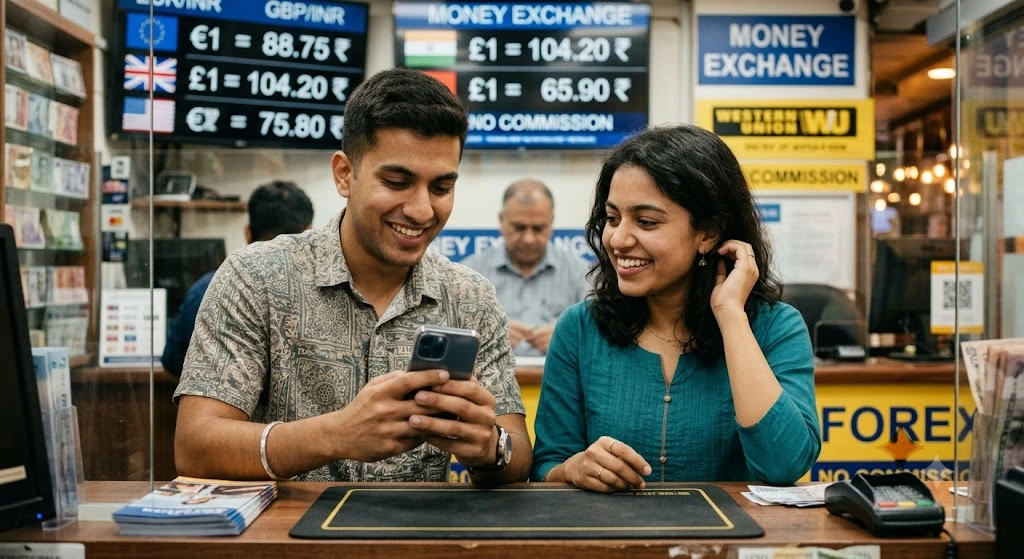
The global macroeconomic landscape is undergoing a profound transformation, driven by the relentless advancement of financial technologies. For decades, the movement of capital across international borders has been entirely dependent on legacy financial institutions. These traditional frameworks, while historically necessary, have become synonymous with opacity, sluggish processing times, and exorbitant costs. However, the emergence of decentralized technologies and innovative architectural models is fundamentally rewriting the rules of international finance. Blockchain principles and Peer-to-Peer (P2P) matching networks are not merely alternative options; they represent the definitive technological future of global value exchange.
To fully grasp the magnitude of this shift, it is essential to analyze the structural inefficiencies of the current paradigm and contrast them with the streamlined, borderless solutions emerging today. By bypassing traditional intermediaries and establishing direct digital connections, modern marketplaces are successfully addressing the long-standing frustrations of users worldwide. The fundamental question driving this evolution remains constant: how much does it cost, and how quickly can funds reach their intended destination? The answers lie in the architecture of the networks facilitating these exchanges.
Table of Contents
The core issue with international finance today is the reliance on correspondent banking and the SWIFT (Society for Worldwide Interbank Financial Telecommunication) network. When capital is dispatched from one nation to another through a traditional bank, it rarely travels in a straight line. Instead, it hops through a complex web of intermediary banks. Each node in this network acts as a tollbooth, extracting a fraction of the capital in exchange for processing the data and moving the funds to the next stage.
This multi-tiered system inherently breeds financial inefficiency. The most insidious aspect of this structure is the prevalence of hidden bank fees. Financial institutions frequently advertise "zero fee" or "low cost" transfers, masking their true profit margins within heavily marked-up exchange rates. The end user, unaware of the real interbank rate—the wholesale rate at which banks trade currencies with one another—absorbs this hidden margin. Consequently, the recipient receives significantly less local currency than the global market dictates they should.
Beyond the economic cost, the traditional system is plagued by severe temporal delays. Because legacy systems require the physical settlement of accounts across different time zones and regulatory jurisdictions, a standard international wire can take anywhere from three to seven business days to clear. For families relying on remittances for daily survival, or businesses waiting on vital cash flow, these delays are not just inconvenient; they are economically damaging. The necessity for a comprehensive evaluating the battle between modern marketplaces and legacy banks over transfer fees becomes evident when one scrutinizes the sheer volume of wealth lost to these antiquated mechanisms every single day.
Furthermore, the physical infrastructure of traditional remittance companies adds another layer of overhead. Maintaining brick-and-mortar storefronts, employing local agents, and managing physical cash logistics require massive operational budgets. These costs are inevitably passed down to the consumer. The modern digital economy demands a solution that strips away this physical overhead in favor of pure data efficiency.
The antidote to the correspondent banking dilemma is found in the elegance of Peer-to-Peer (P2P) networks. A P2P financial marketplace fundamentally alters the routing of capital. In this innovative model, the money never actually crosses physical borders. Instead, the platform acts as a sophisticated, high-speed matching engine, pairing individuals who hold complementary currency needs.
Consider the architecture of a platform like CashSwap Club. The ecosystem is designed around multi-currency digital wallets, enabling users to hold balances in key global currencies such as EUR, USD, GBP, and CAD. When a transaction is initiated, the system does not send funds overseas. Instead, it locates another user on the platform looking to execute the exact inverse transaction. The exchange happens entirely within the platform's secure environment, directly between same-currency wallets. By matching local supply with local demand, the platform achieves instant settlement without ever touching the SWIFT network.
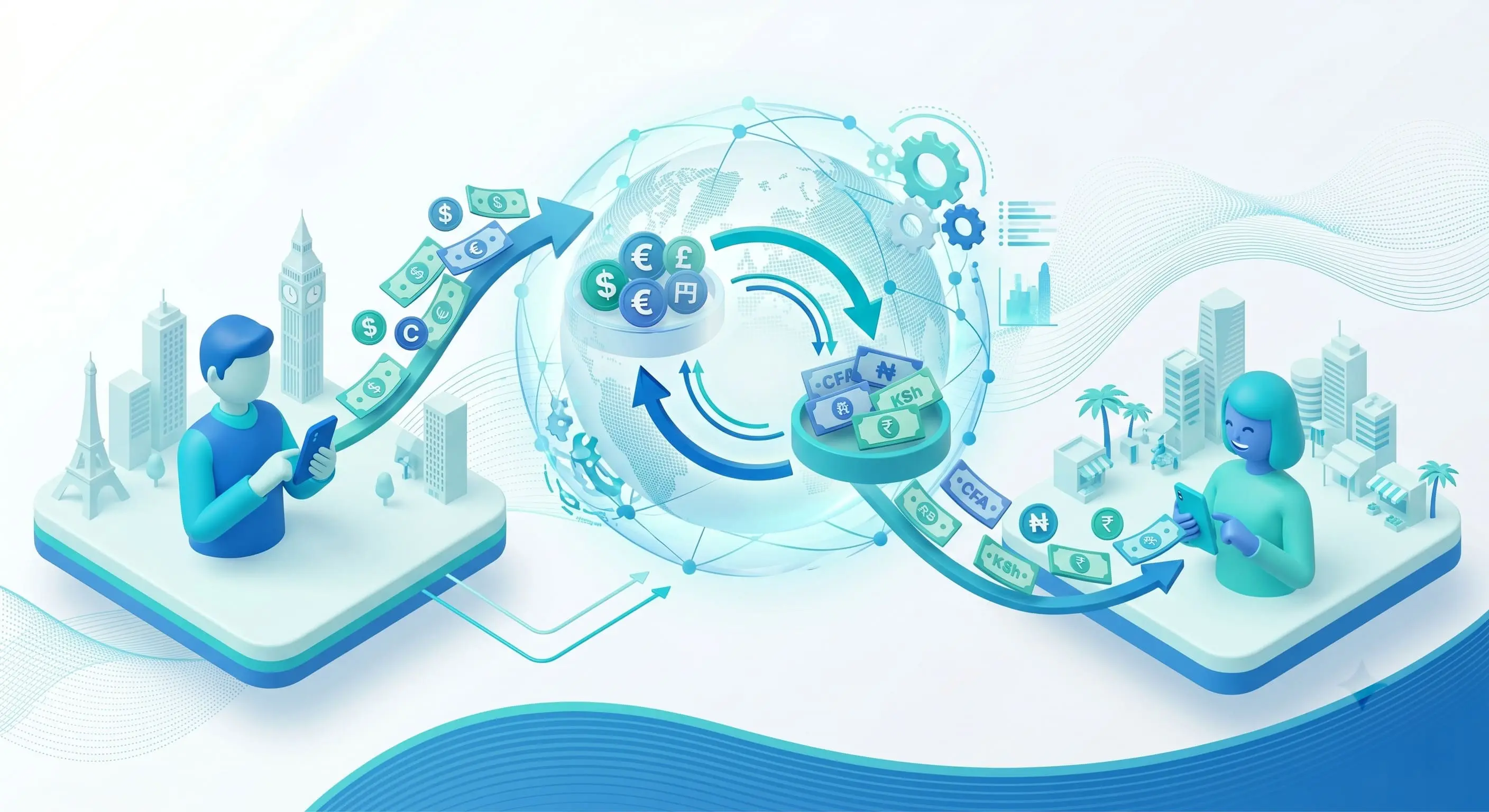
This localized clearing mechanism is the secret to offering the real interbank exchange rate. Because there are no cross-border settlement costs, currency conversion risks, or intermediary banks demanding a cut, the platform can facilitate the swap at the pure, un-marked-up market rate. The only cost to the user is a minimal, transparent, and fixed platform fee, entirely disassociated from the volume of the transfer. For individuals understanding why choosing a P2P architecture fundamentally changes the cost structure, this represents a paradigm shift in wealth preservation.
The flow of local currency—getting funds into the digital wallet and extracting them afterward—is handled entirely off-platform via domestic banking networks. Since domestic transfers (like SEPA in Europe or ACH in the US) are typically free and instantaneous, the entire lifecycle of the transfer remains highly efficient. The P2P marketplace essentially serves as an isolated, frictionless environment where the actual currency swap occurs, surrounded by the existing, highly efficient local banking infrastructure of the respective countries.
Transitioning from traditional banking to a decentralized marketplace may seem daunting, but the user experience is engineered for ultimate simplicity. The process is designed to be intuitive, requiring no advanced technical knowledge of blockchain or financial matching algorithms. The focus remains entirely on delivering speed, cost-effectiveness, and reliability.
The journey begins with account creation and the establishment of the multi-currency digital wallet. Once verified, the user deposits funds into their specific currency wallet (e.g., EUR) via a standard local bank transfer. Because this is a domestic movement of funds, it clears rapidly and without the heavy fees associated with international wires.
The second step is the core of the P2P experience: configuring the swap. The user selects the target currency (e.g., USD) and inputs the desired amount. At this exact moment, a comprehensive money transfer comparison reveals the stark difference in value. The platform instantly displays the real interbank rate and the minimal fixed fee, providing an exact, guaranteed amount that the recipient wallet will receive. There is no ambiguity, no dynamic spread, and no unexpected deductions.
Once the transaction is confirmed, the matching engine takes over. The system pairs the request with a counterparty seeking the exact opposite exchange. Because the liquidity exists within the platform's ecosystem, the swap executes instantly. The funds are immediately reflected in the target currency wallet.
The final step involves off-ramping. The recipient simply withdraws the newly acquired funds from their digital wallet to their local bank account, again utilizing fast, free domestic transfer networks. The entire end-to-end process bypasses the friction of international borders, relying purely on the efficiency of synchronized local actions.
When capital bypasses traditional banks, the immediate question raised by users and regulators alike concerns security and fraud prevention. Operating a P2P financial matching engine requires a technological and regulatory framework that is infinitely more robust than legacy systems. True financial security in the digital age relies on mathematical verification, comprehensive identity protocols, and community-driven accountability.
The foundation of this security is the KYC (Know Your Customer) and AML (Anti-Money Laundering) compliance architecture. Before any user can fund a wallet or initiate a swap, they must undergo rigorous identity verification. This process typically involves algorithmic biometric checks, government-issued document scanning, and real-time database cross-referencing to ensure that every participant in the marketplace is a verified, legitimate actor. By strictly gating entry to the ecosystem, the platform eliminates the anonymity that fosters illicit financial activity.
Furthermore, the transaction architecture itself is designed to prevent default or fraud. When a swap is initiated, the required funds are locked within the respective wallets using secure, automated protocols—often mirroring the escrow capabilities of blockchain smart contracts. The exchange only executes when both sides of the ledger are fully funded and verified by the matching engine. This simultaneous, atomic settlement guarantees that neither party can withdraw funds without completing their end of the transaction.
Beyond cryptographic and regulatory security, modern marketplaces leverage the power of community trust mechanisms. To ensure absolute behavioral transparency, every single transaction must be evaluated and rated by both participating users upon completion. This mandatory feedback loop creates a visible, immutable reputation score for every participant. Bad actors are immediately identified and algorithmically isolated from the matching pool, while reliable participants are rewarded with faster matches and higher trust tiers. This self-regulating community aspect provides a layer of social security that anonymous banking networks simply cannot replicate.
The technological evolution of money transfers is not merely a matter of upgrading software; it is a fundamental redesign of how global liquidity is managed. By abandoning the fragmented, toll-heavy correspondent banking model in favor of centralized matching engines and decentralized P2P networks, the financial industry is finally aligning with the demands of the modern user. The days of accepting opaque exchange rate markups and agonizing delays are drawing to a close.
Marketplaces operating on these principles demonstrate that international finance can be equitable. By keeping capital within its local jurisdiction and simply swapping ownership of balanced digital wallets, the friction of borders is mathematically eliminated. The result is a system characterized by uncompromising transfer transparency, where the interbank rate is democratized, and hidden margins are replaced by flat, predictable fees.
For individuals and businesses tired of enriching intermediaries, the path forward requires a transition to these modern networks. The technology is mature, the regulatory frameworks are robust, and the economic benefits are indisputable. To fully understand the philosophy driving this financial revolution, one can review the core principles shaping decentralized finance. For those ready to experience the difference immediately and stop paying hidden fees, it is time to access the live exchange rate simulator and witness the power of Peer-to-Peer matching firsthand.
Yes, legitimate P2P financial marketplaces operate under strict regulatory frameworks. They are required to implement comprehensive KYC (Know Your Customer) and AML (Anti-Money Laundering) protocols, identical to those used by traditional financial institutions. Every user is fully verified, and funds are held in secure, safeguarded accounts, ensuring absolute compliance with international financial regulations.
Unlike traditional banks that buy currency at the wholesale rate and sell it to consumers at a marked-up retail rate, a P2P matching engine simply pairs two users who have opposing currency needs. Because the platform acts only as a facilitator for the swap and does not take on currency risk or use intermediary routing networks, it can execute the exchange at the exact mid-market (interbank) rate without adding hidden margins.
Modern marketplaces utilize highly liquid matching pools across major currencies (such as EUR, USD, GBP, CAD). In the vast majority of cases, matching is instantaneous due to high transactional volume. However, in the rare event of a slight liquidity imbalance, the transaction is securely queued. Sophisticated algorithms prioritize matching based on time, amount, and user reputation, ensuring the swap executes as rapidly as possible without compromising the guaranteed exchange rate.
Mandatory user ratings are a cornerstone of decentralized trust and security. By requiring both parties to evaluate the transaction upon completion, the platform builds an immutable reputation ledger. This ensures that all participants act with integrity. High reputation scores facilitate faster future matches, while any fraudulent or uncooperative behavior is immediately flagged, leading to the rapid suspension of malicious accounts.

Our peer-to-peer currency exchange and money transfer platform is currently under development. We are preparing a solution that will allow you to exchange currencies with a seamless and secure experience.
To be among the first to know and not miss anything about the launch, join the club by subscribing to our newsletter.
Visuals disclosure : In the interest of transparency, please note that the images illustrating this article were created using artificial intelligence (AI) generation tools.
© CashSwap Club 2026 - All rights reserved
Designed with ❤️ in Paris • Made in France 🇫🇷
 French
  Spanish