Over the past decade, Venezuela has gone through one of the most profound economic transformations in modern Latin American history. Years of hyperinflation, successive redenominations of the bolívar and a widespread de facto dollarization have reshaped how millions of households pay, save and get paid. At the same time, an estimated several million Venezuelans have settled abroad, from Bogotá and Madrid to Miami, Toronto and London. For a large share of families who stayed behind, the money sent by these relatives is no longer a bonus: it is what pays for food, medicine and basic services.
In this context, a pressing question arises for anyone who wants to send money to Venezuela: how much will it cost, and how quickly will the family actually receive the funds? Traditional international bank wires, built around foreign accounts and correspondent banks, are often slow, expensive and poorly suited to the Venezuelan reality. Meanwhile, a local digital ecosystem has emerged, anchored by the interbank mobile payment system Pago Móvil. Receiving support "without a traditional bank account" therefore means something precise here: no need for a foreign account, no international wire to collect, and no trip to a branch. This article explains how this ecosystem works, where conventional banking falls short, and how a Peer-to-Peer (P2P) matching model can connect the diaspora and their families in a faster, more transparent and more secure way.
Few countries illustrate as clearly as Venezuela how a monetary crisis can accelerate the adoption of digital payments. When cash in bolívares became scarce and lost its value within weeks, paper money simply could not keep up with prices. Venezuelans turned massively to electronic payments: point-of-sale card terminals, online banking and, above all, mobile transfers.
Pago Móvil (literally "mobile payment") is an interbank instant payment system that allows any user to send bolívares from their phone to another person, even if that person banks with a different institution. To make a payment, the sender only needs three pieces of information about the recipient: their mobile phone number, their national identity card number (cédula) and the code of their bank. The transfer is typically credited within seconds. Pago Móvil is used everywhere, from supermarkets and pharmacies to taxi drivers and street vendors, which makes it the most practical way for a family to receive and immediately spend money in local currency.
It is worth being clear: Pago Móvil is linked to a domestic account in bolívares. What it removes is the need for the recipient to hold a foreign account, to wait for an international wire or to visit a branch. For families, the experience becomes phone-based and immediate, which is precisely what matters when the goal is to buy groceries the same day.
Most Venezuelans access Pago Móvil through one of the country's major banks. Banco de Venezuela, the state-owned bank, has the largest customer base and a broad national presence. Banesco, one of the leading private banks, is known for its widely used mobile app and its digital services. BBVA Provincial, historically linked to the Spanish group BBVA, is another key institution, particularly popular among urban and professional customers. All three support Pago Món-compatible transfers, which means a recipient with an account at any of them can receive funds from a sender at another bank almost instantly.
This shift is part of a broader global trend. The analysis of how mobile money transfer apps are disrupting fintech shows that Venezuela is far from an isolated case: from Kenya to India, mobile-first payment systems are redefining access to financial services.
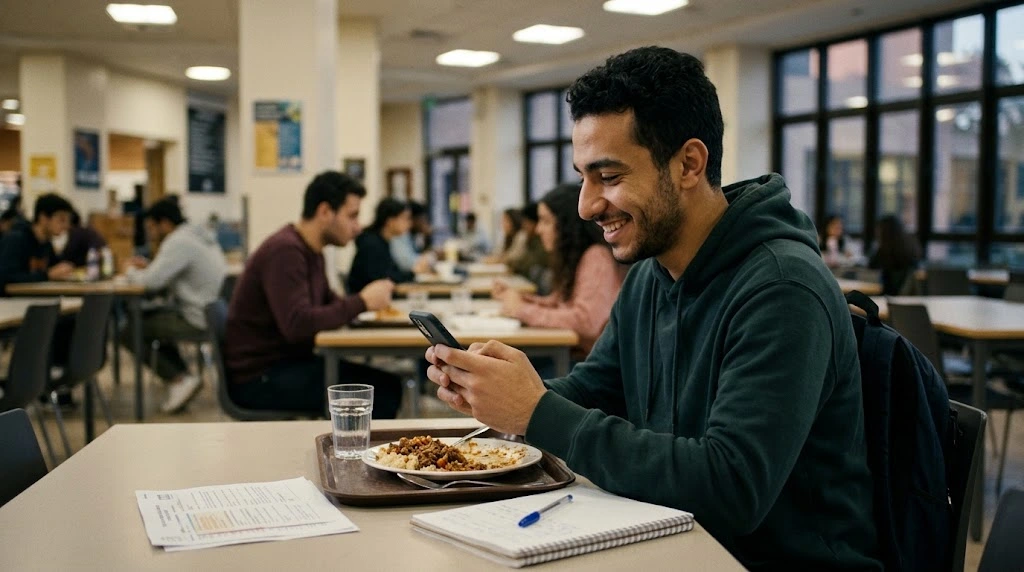
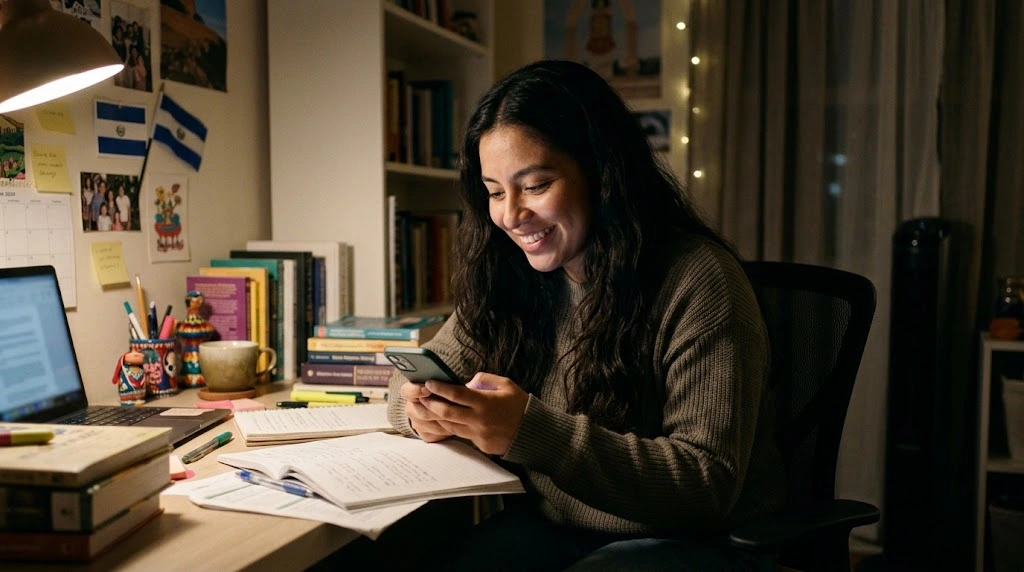
Behind the statistics lies a very concrete reality. A nurse in Madrid, a delivery driver in Miami or an engineer in Toronto often sends a fixed amount every week or every month so that parents, children or siblings can buy flour, rice, cooking oil, medicine and hygiene products. Timing is critical: prices can move quickly, and a delay of several days can mean an empty pantry. This is why the diaspora needs a smooth and secure P2P matching system capable of turning euros, dollars or pounds into local purchasing power without unnecessary friction. The dedicated guide to sending money to Venezuela with P2P matching and transfer apps explores these specific corridors in further detail.
For a sender abroad, the most obvious option might seem to be a classic international bank transfer. In the Venezuelan context, however, this route accumulates obstacles.
Most international wires travel through the SWIFT network, a secure messaging system that banks use to communicate with one another. When the sender's bank has no direct relationship with the recipient's bank, the transfer passes through one or more "correspondent banks", each of which may deduct its own fee. For Venezuela, correspondent relationships are limited and heavily scrutinized, which can mean additional checks, longer processing times and, in some cases, rejected payments.
The largest cost rarely appears on a bank's price list: it is hidden in the exchange rate. Instead of applying the interbank rate, the real rate at which banks trade currencies among themselves, institutions apply a marked-up "customer" rate. This difference, known as the spread, can quietly add several percentage points to the cost of each transfer. The article explaining why bank exchange rates differ from real rates breaks down this mechanism and its cumulative impact on people who send money regularly.
A SWIFT transfer can take two to five business days, sometimes longer, depending on public holidays and compliance reviews. For a family waiting to buy food or medicine, this uncertainty is simply incompatible with daily life. In addition, the funds must then be converted and moved into a local account, adding another step and potentially another fee. The overall result: high transfer fees, an opaque rate and an unpredictable arrival date.
Faced with these limits, another model has emerged: directly connecting people whose needs are complementary. This is the principle behind CashSwap Club, a money transfer marketplace based on Peer-to-Peer (P2P) matching.
The idea is simple. A person in Spain wants to support their family in Caracas. Elsewhere, another user holds funds on the platform and has a counterpart need: for example, someone with resources in Venezuela who wants euros in Europe for a relative studying there. Instead of pushing an expensive international wire through the banking system, the platform matches these two needs. Each currency stays within its own zone: euros move in Europe, while the local leg in bolívares is settled inside Venezuela. The money never physically crosses a border.

To organize these exchanges, CashSwap Club manages multi-currency wallets owned by users, in EUR, USD, GBP and CAD. Transactions on the platform take place exclusively between wallets of the same currency: a euro wallet trades with a euro wallet, a dollar wallet with a dollar wallet. Flows in local currency, in turn, move outside the platform through domestic bank transfers or local payment solutions. In Venezuela, this local leg naturally relies on Pago Móvil, allowing the family to receive bolívares directly on their phone, in an account at Banco de Venezuela, Banesco, BBVA Provincial or another participating bank, and to spend them immediately.
Because supply and demand meet directly, there is no need for an intermediary that buys and resells currency with a margin. On the platform, exchanges are carried out at the real market rate, with minimal fixed fees displayed upfront. The sender knows in advance exactly what the transaction will cost, which removes the bad surprises typical of bank wires.
A community dimension completes the system: every transaction must be rated by both users at the end of the exchange. This mutual rating creates a visible reliability history, strengthens each participant's accountability and helps build a supportive community where trust grows transaction after transaction. For families relying on these funds for essentials, this transparency is a major reassurance.
For anyone looking for the best money transfer app to support relatives in Venezuela, three factors make the difference: the displayed fees, the margin hidden in the exchange rate, and the time it takes for the money to become usable.
Transparency matters here: the duration of a P2P exchange is not dictated by a slow international network, but by two local factors. First, the availability of a counterpart on the corridor at that moment. Second, the speed of the domestic payments involved on each side, such as an instant SEPA transfer in the eurozone or a Pago Móvil transfer in Venezuela, both of which can settle in seconds. On a monthly transfer of 300 dollars, avoiding a bank margin of 3 to 5% represents 9 to 15 dollars saved each month, which can cover several days of basic groceries for a family.
Setting up an efficient support routine only takes a few minutes of preparation. Here is a structured method to make each transfer predictable and secure.
The first step is to register on the platform and complete identity verification. This one-time process, described in the next section, unlocks access to exchanges.
Before any exchange, it is essential to confirm the recipient's information: mobile number registered with Pago Móvil, cédula number and bank code. A single digit error can delay the payment, so double-checking these details with the family is a good habit.
The sender funds their wallet in EUR, USD, GBP or CAD through a domestic transfer from their usual bank. Many banks allow standing orders, which automates this step and ensures funds are ready on a fixed date. The complete guide to automating recurring money transfers details how to build this kind of routine aligned with payday.
Before each transfer, the live rate simulator displays the applicable rate and fixed fees, so the sender can see the cost of the operation in advance. It is then possible to start a transparent money transfer with CashSwap Club in just a few steps.
Once the match is completed and the local Pago Móvil payment has reached the family, each party confirms receipt and rates the exchange. This mandatory rating closes the transaction and feeds the reputation system that protects the whole community.
Every few months, a quick review comparing amounts received, fees paid and delivery times helps confirm the savings achieved and adjust the schedule or amount to the family's changing needs.
Entrusting money to a platform, especially when it is destined for essential needs, requires solid guarantees. Financial security relies on several complementary layers.
KYC stands for "Know Your Customer". It refers to the identity verification procedures that financial services are required to apply. In practice, the user provides an identity document and, in some cases, additional proof. Far from being a pointless formality, this step ensures that every member of the community is who they claim to be. It is a barrier against identity theft, fraud and money laundering. The article on why regulations require identity verification in finance explains this framework and its concrete benefits for users.
Money transfer platforms operate within strict regulatory frameworks, particularly regarding the prevention of money laundering and terrorist financing. Transfers involving Venezuela may also be subject to specific rules depending on the sender's country of residence, and users remain responsible for complying with the laws that apply to them. Unusual transactions may be subject to additional checks. These controls, sometimes perceived as friction, protect users and the long-term viability of the service.
Beyond regulation, trust comes from clarity: rates shown upfront, fees known in advance, and mutual rating of every exchange. This philosophy of transparency and community solidarity is set out in the platform's founding text, which it is possible to explore in the CashSwap Club manifesto.
Venezuela's digital economy was born out of necessity, but it has produced remarkably efficient local tools. With Pago Móvil and the mobile services of banks such as Banco de Venezuela, Banesco and BBVA Provincial, families can receive and spend money within seconds, without depending on a foreign account or a slow international wire. What was missing was a bridge between this local ecosystem and the diaspora's earnings abroad.
The P2P matching model provides that bridge: money stays within its currency zone, exchanges take place at market rates with fixed and visible fees, and each transaction is validated through mutual rating. For millions of Venezuelans abroad, it is a way to turn a monthly act of solidarity into a predictable, transparent and secure routine.
The best way to measure the difference is to see it in numbers. The live rate simulator shows in seconds the exact rate and fees of the next transfer, with no hidden costs: testing it before the next payment to family in Venezuela is the simplest way to compare it with the usual bank offer.
The timing depends on how quickly a counterpart is found on the corridor and on the speed of local payments. Since Pago Móvil transfers are typically credited within seconds, the local leg in Venezuela can be completed very quickly, compared with several business days for a traditional SWIFT wire.
Yes. With P2P matching, the local payment is made in bolívares through Pago Móvil, which only requires the recipient's phone number, cédula and domestic bank code. No foreign account or international wire is needed on the recipient's side.
The platform applies the market exchange rate with minimal fixed fees, displayed before each exchange. There is no margin hidden in the rate, so the full cost is known in advance.
Every user goes through identity verification (KYC), transactions on the platform take place between same-currency wallets, and each exchange is rated by both parties. Users should also make sure their transfers comply with the rules in force in their country of residence.

Our peer-to-peer currency exchange and money transfer platform is currently under development. We are preparing a solution that will allow you to exchange currencies with a seamless and secure experience.
To be among the first to know and not miss anything about the launch, join the club by subscribing to our newsletter.
Visuals disclosure : In the interest of transparency, please note that the images illustrating this article were created using artificial intelligence (AI) generation tools.
© CashSwap Club 2026 - All rights reserved
Designed with ❤️ in Paris • Made in France 🇫🇷
 Spanish