
The foreign exchange market is the most liquid and dynamic financial network in the global economy, operating twenty-four hours a day, five days a week. Trillions of dollars transition across digital ledgers continuously, causing the valuation of currencies to fluctuate in real-time. For expatriates, international workers, and global businesses, understanding these micro-fluctuations is not merely an academic exercise; it is a vital necessity for preserving wealth. Traditional financial institutions have long relied on the opacity of these fluctuations to obscure the true cost of moving capital. However, modern technological frameworks are dismantling these archaic systems, offering unprecedented clarity and efficiency. This comprehensive analysis explores the underlying macroeconomic drivers of currency volatility and details how innovative decentralized models are revolutionizing the way value is exchanged across borders.
To comprehend why the value of money shifts continuously, one must examine the foundational economic indicators that dictate supply and demand on the global stage. Central bank interventions play a primary role. When institutions such as the Federal Reserve or the European Central Bank adjust interest rates, they directly influence the attractiveness of their respective currencies. Higher interest rates typically offer lenders better returns relative to other countries, thereby attracting foreign capital and causing the exchange rate to rise. Conversely, inflationary pressures devalue a currency's purchasing power, leading to depreciation on the open market.
Beyond monetary policy, geopolitical stability and economic performance metrics—such as gross domestic product (GDP) growth, unemployment rates, and manufacturing output—serve as real-time barometers for currency valuation. The foreign exchange market acts as a highly sensitive aggregate of human psychology and algorithmic trading, reacting instantaneously to breaking news, elections, and international trade agreements. Because millions of actors are simultaneously speculating and hedging against these variables, the equilibrium price is inherently unstable, resulting in the minute-by-minute fluctuations observed on trading terminals.
For decades, the legacy financial sector has capitalized on this inherent market volatility. Traditional international transfers typically rely on the SWIFT network (Society for Worldwide Interbank Financial Telecommunication). It is crucial to understand that SWIFT does not actually move money; it merely transmits secure messaging orders between correspondent banks. This multi-tiered relay system introduces friction, delays, and a cascade of intermediary costs. Each institution in the chain assumes a degree of exchange rate risk and consequently inflates the transaction cost to protect its own margins.
The most pervasive issue within this traditional framework is the implementation of a marked-up exchange rate. Instead of providing the mid-market rate—the true, neutral rate derived from the midpoint between global buy and sell orders—legacy providers apply a spread. This spread acts as a concealed tax on the remittance. When individuals attempt to conduct a comprehensive money transfer comparison, the advertised zero-commission offers are frequently offset by highly disadvantageous exchange rates. Consequently, billions of dollars are lost annually to these hidden bank fees, disproportionately affecting communities that rely on cross-border financial support.
The structural flaws of correspondent banking have necessitated a fundamental redesign of international capital flow. The solution lies in completely bypassing the antiquated necessity of pushing currency across international borders. CashSwap Club represents a paradigm shift through its Peer-to-Peer (P2P) matching marketplace. The core architectural philosophy of the platform is that fiat currency never actually physically or digitally crosses a border. Instead, the system relies on synchronized local clearing.
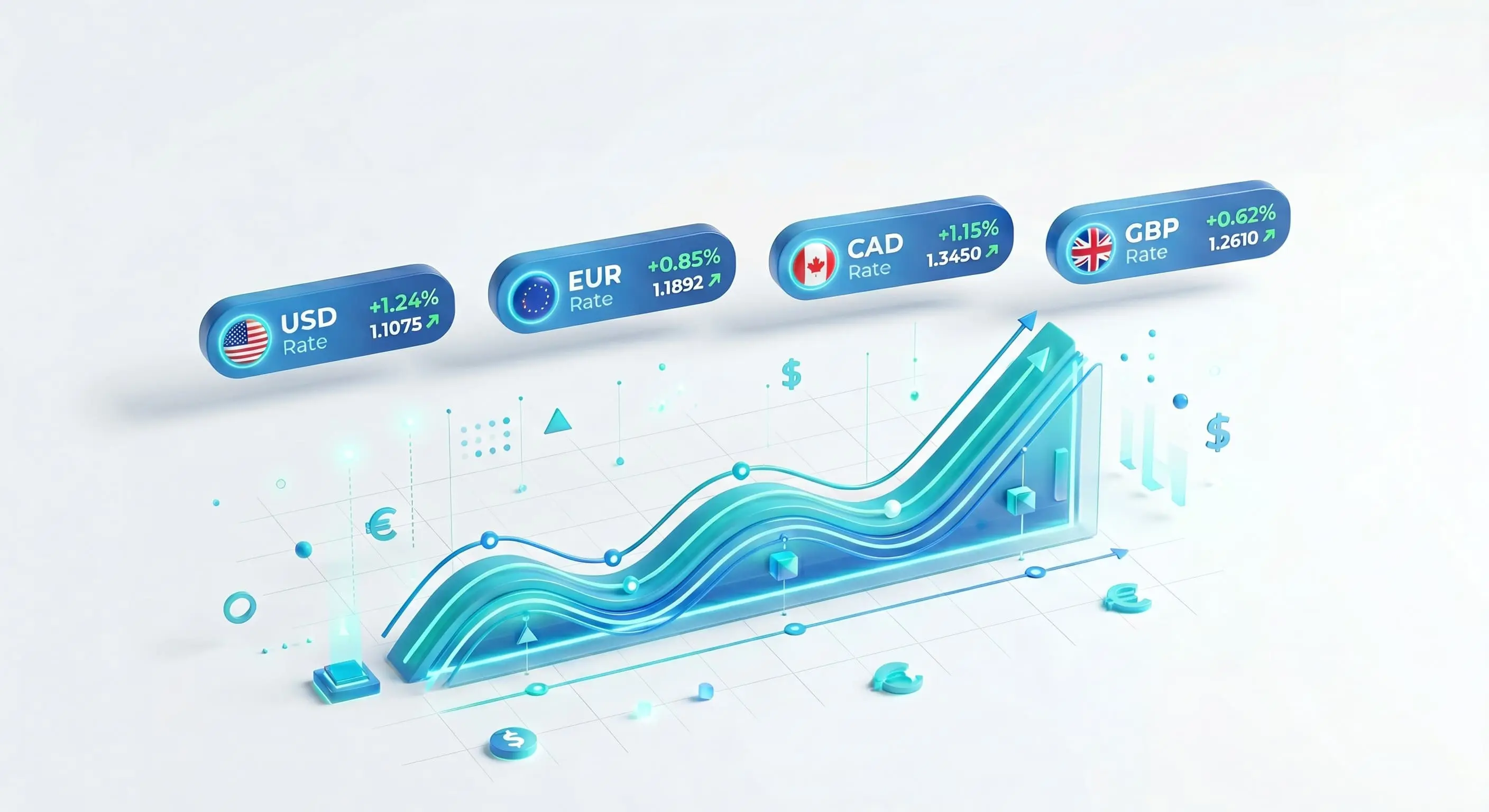
This localized matching engine functions by providing users with multi-currency wallets capable of holding balances in EUR, USD, GBP, and CAD. When a user wishes to convert Euros to US Dollars, the platform's algorithm pairs this request with another user moving capital in the exact opposite direction. The transactions occur strictly between wallets of the same currency within the platform's closed-loop ecosystem. For deposits and withdrawals in local currencies, the platform utilizes domestic banking networks or local payment solutions, entirely circumventing the SWIFT network. By matching supply and demand directly at the true interbank rate, the platform ensures total transfer transparency and applies only minimal, clearly defined fixed fees. This methodology represents a profound democratization of capital, establishing a foundation for equitable and sustainable global finance.
Transitioning away from legacy banking requires a user experience that prioritizes clarity, speed, and absolute accountability. The architecture of the CashSwap Club marketplace is designed to guide participants through a frictionless journey while maintaining rigorous operational safeguards.
To foster an environment of uncompromising trust, the marketplace mandates a strict community evaluation protocol. At the conclusion of every transaction, both the sender and the receiver are required to rate the interaction. This mandatory feedback loop cultivates a highly reliable ecosystem, where transparency is actively maintained by the community itself.
Innovation in the Fintech sector must be inextricably linked to rigorous regulatory adherence. The decentralization of the matching process does not equate to an evasion of financial oversight; rather, it demands enhanced digital verification frameworks. The foundation of this trust is the KYC (Know Your Customer) protocol. KYC is a mandatory international regulatory requirement designed to verify the identity of every participant on the platform, effectively mitigating the risks of money laundering, fraud, and illicit financial activities.
Beyond identity verification, modern P2P marketplaces utilize advanced cryptographic standards to protect user data and wallet balances. By operating strictly within isolated, same-currency environments, the attack surface for potential financial exploitation is drastically reduced compared to multi-node correspondent banking networks. For individuals seeking to navigate the digital economy safely, maintaining robust financial security is not just a feature, but the foundational architecture of the platform.
The constant fluctuation of global exchange rates is an unavoidable reality of macroeconomic forces. However, being penalized by predatory spreads and opaque operational costs is no longer mandatory. The technological evolution from centralized correspondent banking to decentralized, localized P2P matching represents a definitive solution for international capital flow. By leveraging multi-currency wallets and eliminating cross-border friction, the marketplace empowers participants to exchange value at the true, fair market rate. To experience the precise mechanics of transparent matching, utilize the live rate simulator available on the application to calculate the exact, unalterable cost of the next transaction.
The exchange rate is determined by the continuous buying and selling of currencies on the global foreign exchange market. Macroeconomic factors such as central bank interest rates, inflation data, and geopolitical events cause minute-by-minute shifts in supply and demand, which immediately reflect on currency valuations.
Traditional banks apply a hidden markup (spread) on the mid-market exchange rate to generate profit, alongside charging flat transmission fees. A P2P matching platform connects individuals directly, allowing them to trade at the real interbank rate without intermediary markups, resulting in significantly lower and highly transparent fixed fees.
Yes. Operations are strictly governed by international financial regulations, including mandatory KYC (Know Your Customer) verification to prevent fraud. Furthermore, because the platform operates on a system of isolated multi-currency wallets, funds do not travel across risky international networks but are settled instantly within a secure, closed-loop ledger.
Because the transaction relies on internal wallet transfers rather than international SWIFT messaging, the actual currency exchange happens instantaneously upon matching. The only variables in time are the initial domestic deposit and the final domestic withdrawal, which typically utilize fast, local banking rails.

Our peer-to-peer currency exchange and money transfer platform is currently under development. We are preparing a solution that will allow you to exchange currencies with a seamless and secure experience.
To be among the first to know and not miss anything about the launch, join the club by subscribing to our newsletter.
Visuals disclosure : In the interest of transparency, please note that the images illustrating this article were created using artificial intelligence (AI) generation tools.
© CashSwap Club 2026 - All rights reserved
Designed with ❤️ in Paris • Made in France 🇫🇷
 French
  Spanish