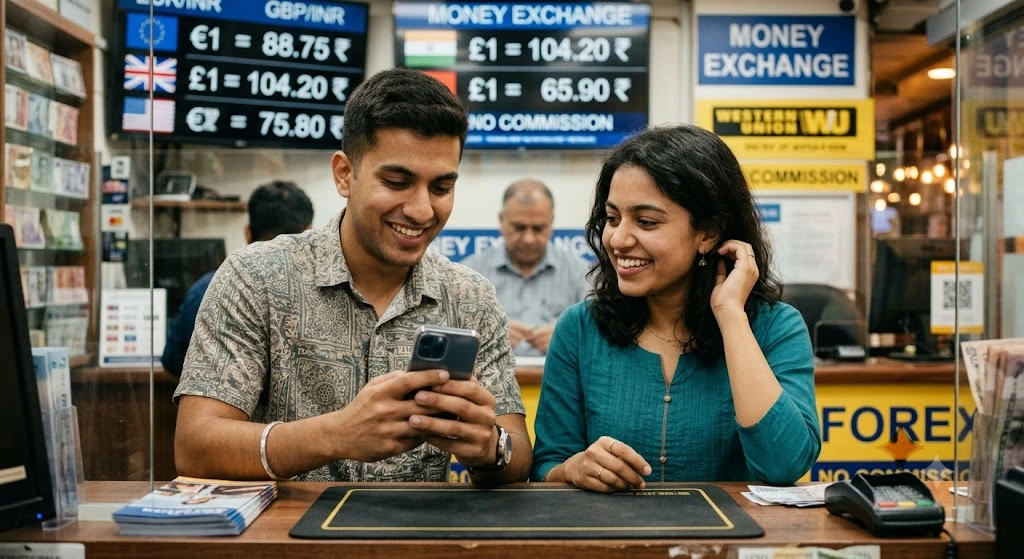
The landscape of international finance is undergoing a monumental shift. For decades, individuals sending funds across borders have been subjected to opaque processes, prolonged delays, and predatory pricing models orchestrated by traditional financial institutions. As globalization accelerates, the demand for equitable, rapid, and transparent remittance systems has never been higher. Navigating this new digital economy requires robust security frameworks to protect users and maintain systemic integrity. Central to this protective infrastructure is the Know Your Customer (KYC) protocol. This comprehensive guide serves as the ultimate KYC checklist, detailing exactly which documents are required to validate initial transactions while exploring the macroeconomic mechanics of modern peer-to-peer financial ecosystems.
By understanding the intricacies of identity verification, users can ensure seamless onboarding and immediate access to fair exchange rates. Furthermore, this exploration will demystify the technological infrastructure that powers borderless transactions without the money ever physically crossing international lines. Security, efficiency, and compliance form the trifecta of modern digital finance, and mastering the KYC process is the crucial first step into this revolutionary ecosystem.
To fully appreciate the necessity of stringent KYC protocols within modern platforms, one must first analyze the structural inefficiencies of the legacy banking system. Traditional cross-border money transfers rely on the SWIFT network, a decades-old messaging system that requires funds to pass through multiple intermediary or correspondent banks. Each node in this correspondent banking chain extracts a fee, leading to a compounding cost structure that heavily penalizes the end-user. This archaic methodology inherently lacks transfer transparency, leaving remitters entirely in the dark regarding the final amount that will reach the beneficiary.
Beyond explicit upfront charges, institutions frequently manipulate exchange rates, applying a significant markup over the mid-market or interbank rate. This practice generates substantial revenue for banks at the expense of the consumer. When conducting a thorough money transfer comparison, the discrepancy between the advertised rate and the actual executable rate becomes glaringly apparent. For those interested in delving deeper into this systemic issue, analyzing the battle of hidden transfer fees against traditional institutions reveals the staggering economic drain imposed on global migrant workers and expatriates.
Moreover, the centralized nature of traditional banking leaves it vulnerable to massive macroeconomic shifts, geopolitical sanctions, and institutional bottlenecks. Market volatility often exacerbates the poor exchange rates offered to retail clients, as banks widen their spreads to hedge against risk. By learning why exchange rates fluctuate and effective strategies to navigate the market, individuals can better understand how decentralized or peer-to-peer models circumvent these traditional financial traps, offering a sanctuary of fair valuation and predictable costs.
The solution to the inherent flaws of correspondent banking lies in structural innovation, specifically the Peer-to-Peer (P2P) matching model. CashSwap Club represents the vanguard of this financial evolution by operating as a centralized marketplace for decentralized liquidity. The fundamental genius of this system is that international funds never actually cross physical or digital borders. Instead, the platform relies on localized clearing through a sophisticated matching engine.
Here is the technical reality of the model: The platform manages multi-currency digital wallets restricted to major global currencies, specifically EUR, USD, GBP, and CAD. When a transaction is initiated, the platform matches the demand of a user wishing to send value in one direction with the demand of another user seeking the exact opposite route. The exchange of fiat value occurs exclusively between wallets of the identical currency hosted within the secure platform environment. Consequently, the actual domestic currency flows—the payout to the local beneficiary—are executed strictly off-platform via immediate national bank transfers or localized payment solutions.
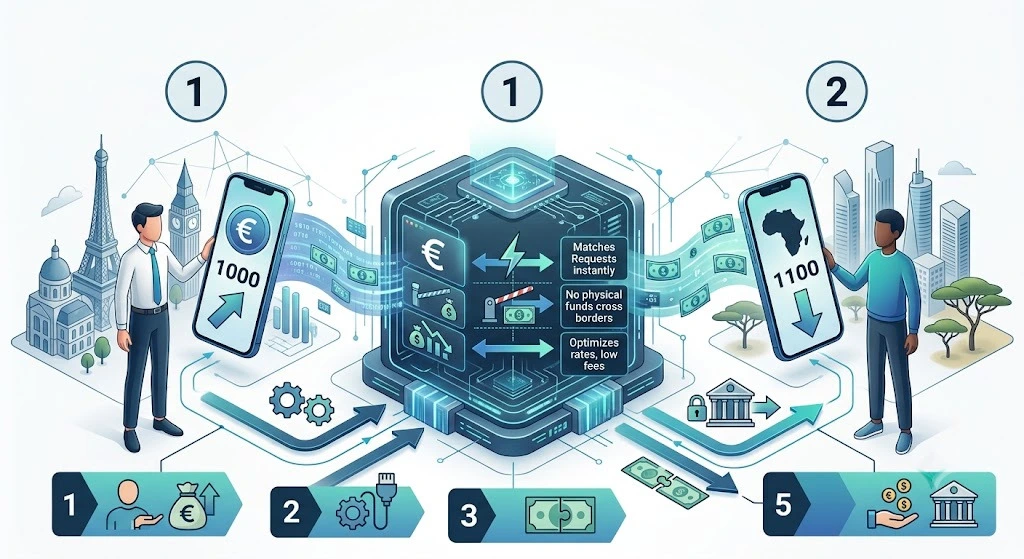
This ingenious architecture completely bypasses international wire networks. By keeping liquidity localized, the platform completely eliminates correspondent banking fees, allowing it to offer the true, un-marked-up interbank exchange rate accompanied only by minimal, transparent fixed fees. For individuals transitioning from legacy systems, evaluating the real savings between a digital marketplace and a local branch quickly demonstrates the mathematical superiority of the P2P approach. The system mathematically perfectly aligns supply and demand, democratizing access to institutional-grade exchange rates.
To fully grasp the ethical and operational ethos driving this marketplace, discovering the foundational principles of decentralized finance is highly recommended. It showcases a commitment to financial inclusivity. Understanding this model makes it clear exploring the core reasons to choose P2P for money transfers is becoming the default choice for millions of global citizens seeking financial autonomy.
In a system where users interact directly to match liquidity, establishing absolute trust is the ultimate prerequisite. This is where the KYC (Know Your Customer) regulatory framework becomes indispensable. KYC is a mandatory identity verification process imposed by global financial regulators to prevent illicit activities, including money laundering (AML), terrorist financing (CFT), and identity theft. However, beyond mere regulatory compliance, KYC acts as the fundamental bedrock of the community's financial security.
When operating a P2P matching marketplace, ensuring that every participant is fully verified guarantees the integrity of the network. It filters out malicious actors and creates a closed, secure ecosystem where individuals can exchange value with total peace of mind. Without stringent KYC protocols, the high degree of transfer transparency and low-cost structure of the platform would be impossible to maintain, as risk premiums would inevitably rise.
Therefore, viewing the KYC process not as a bureaucratic hurdle, but as a robust digital shield, changes the user's perspective. It is a one-time investment of time that unlocks a lifetime of secure, low-cost financial services. For those looking to optimize their digital safety, adopting essential reflexes to protect online financial transactions is highly advised, with completing a full KYC verification ranking at the very top of that priority list.
To ensure a frictionless onboarding experience and rapid account activation, preparing the correct documentation in advance is highly recommended. The verification process is fully digitized, utilizing advanced optical character recognition (OCR) and biometric analysis to validate submissions within minutes. Below is the comprehensive checklist of documents required to unlock full transactional capabilities.
The primary requirement is a government-issued identity document that establishes legal name, date of birth, and visual identity. The document must be currently valid (not expired) and feature a clear photograph. Accepted documents include:
Pro-Tip for scanning: Avoid using flash photography which can create glare over critical information. Natural lighting works best. The image must be in high resolution, typically submitted in JPEG or PNG format.
Financial regulations mandate the verification of the user's current residential address to establish tax residency and jurisdictional compliance. The document must display the user's full name, the complete residential address (P.O. Boxes are prohibited), and an issuance date clearly visible. Accepted documents include:
To prevent identity spoofing using stolen documents, modern KYC frameworks require a biometric liveness check. This usually involves using a smartphone camera or webcam to capture a real-time selfie or a short dynamic video (e.g., turning the head slightly). This process matches the facial geometry of the live user with the photograph present on the submitted Proof of Identity.
While standard usage limits are unlocked via basic POI and POA verification, users intending to transfer significant volumes of capital may trigger enhanced due diligence (EDD) protocols. In such cases, providing a Source of Funds (SOF) is required to comply with international Anti-Money Laundering (AML) directives. Appropriate documentation might include recent payslips, dividend statements, or real estate sale contracts.
Once the KYC documents are approved and the account is activated, executing the first transaction is a streamlined, highly intuitive process designed for maximum efficiency. The architecture of the platform ensures that users retain full control over their funds throughout the lifecycle of the exchange.
First, the user must fund their platform wallet in one of the supported core currencies (EUR, USD, GBP, or CAD) via a standard domestic bank transfer. Because this initial funding occurs domestically, it avoids all international SWIFT fees. Once the wallet is credited, the user inputs the desired amount and the target local currency for the beneficiary. The platform's proprietary algorithm then scans the global network to find a reciprocal user looking to exchange value in the opposite direction.
Upon a successful match, the smart contract locks the funds, guaranteeing the interbank exchange rate and applying the minimal fixed fee. The domestic payout—the final leg of the journey—is then executed off-platform directly to the beneficiary's local bank account or mobile money wallet. This bifurcation of the process—matching core currencies on-platform and settling local currencies off-platform—is the secret to the system's unprecedented speed and cost-effectiveness.
Crucially, to maintain the integrity and collaborative spirit of the community, every transaction concludes with a mandatory peer evaluation. Both parties must rate the interaction, focusing on speed and communication regarding the off-platform local settlement. This creates a self-regulating ecosystem where reliable actors are rewarded with faster future matches and higher trust scores. For new users, understanding how trust rating systems function in peer-to-peer networks is vital for establishing a strong reputation and ensuring priority liquidity matching in subsequent transfers.
The era of accepting exorbitant hidden fees, opaque exchange rate markups, and unpredictable transfer delays is definitively over. The transition to a Peer-to-Peer matching marketplace represents a reclaiming of financial sovereignty for expatriates, international workers, and global citizens. By embracing the strict but necessary KYC protocols outlined in this checklist, users contribute to an impregnable fortress of financial security, protecting not only their own assets but the integrity of the entire community.
Through technological innovation, multi-currency wallet management, and a commitment to utilizing the genuine interbank rate, the friction of cross-border finance is eliminated. The process is clear: prepare the necessary identification, verify the account, and join a borderless economic community built on trust and mutual benefit.
The financial revolution is accessible today. Stop losing hard-earned capital to legacy banking inefficiencies. Take the first step by accessing the global money transfer marketplace and utilize the live calculator to discover exactly how much can be saved on the next international remittance.
Thanks to advanced automated Optical Character Recognition (OCR) systems, standard KYC verifications are typically processed within 5 to 15 minutes. In cases where the automated system flags an image for poor lighting or glare, a manual review by the compliance team may be required, which can extend the timeline to 24 hours.
Yes, absolutely. The platform operates strictly within the legal frameworks of the jurisdictions it serves. By enforcing mandatory KYC protocols and partnering with regulated financial entities to hold the multi-currency wallets, the platform ensures total compliance with international anti-money laundering (AML) and counter-terrorism financing (CFT) regulations.
No. Traditional banks generate massive profits by hiding margins within inflated exchange rates. This P2P marketplace utilizes the live mid-market (interbank) rate exclusively. The only cost is a transparent, predetermined fixed fee displayed clearly before the transaction is finalized, ensuring total transfer transparency.
Because the local fiat settlement occurs off-platform between the matched users, the mandatory rating system guarantees accountability. It builds a decentralized web of trust, ensuring that all participants act promptly and honestly. High-rated users benefit from faster future matches, creating a highly secure, self-regulating community environment.

Our peer-to-peer currency exchange and money transfer platform is currently under development. We are preparing a solution that will allow you to exchange currencies with a seamless and secure experience.
To be among the first to know and not miss anything about the launch, join the club by subscribing to our newsletter.
Visuals disclosure : In the interest of transparency, please note that the images illustrating this article were created using artificial intelligence (AI) generation tools.
© CashSwap Club 2026 - All rights reserved
Designed with ❤️ in Paris • Made in France 🇫🇷
 French
  Spanish