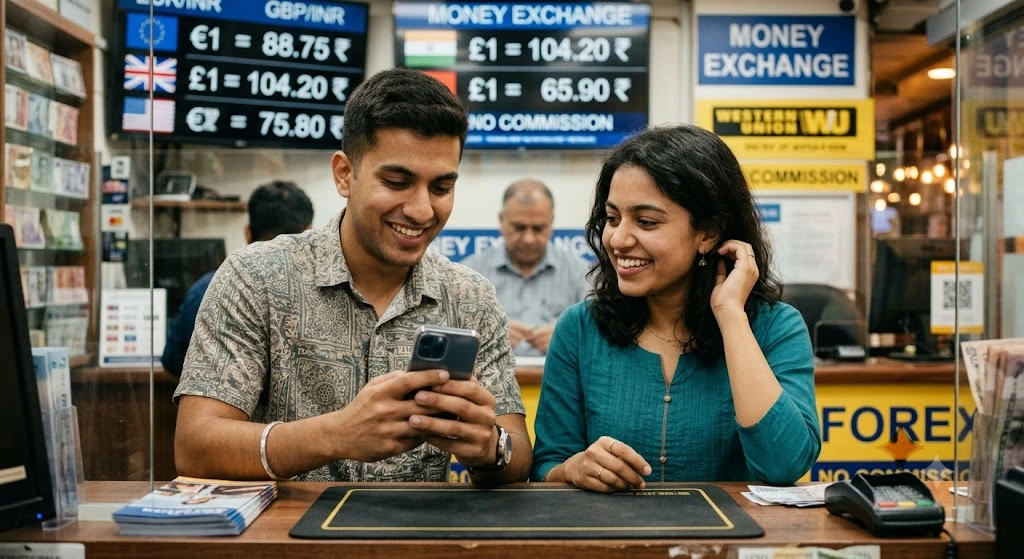
The global landscape of international remittances and financial exchanges is undergoing a monumental shift. For decades, individuals sending funds across borders have been subjected to the slow, opaque, and often expensive machinations of traditional financial institutions. However, the rise of digital marketplaces has introduced a highly efficient alternative. By leveraging peer-to-peer architectures, modern solutions are redefining how liquidity moves on a global scale. This comprehensive analysis explores the underlying mechanics, the paramount importance of robust rating systems, and how innovative platforms facilitate seamless international transactions.
To navigate this extensive guide, please use the structured table of contents below:
Historically, moving capital from one jurisdiction to another necessitated the involvement of a vast network of correspondent banks. Each intermediary institution within this chain requires compensation for processing the transaction, which inevitably leads to inflated costs for the end-user. These costs are rarely presented upfront. Instead, they are embedded within suboptimal exchange rates, creating a significant disparity between the real interbank rate and the consumer-facing rate. When evaluating a reliable money transfer comparison, it becomes immediately apparent that traditional models are fundamentally designed to maximize institutional profit rather than user value.
The lack of transfer transparency is a critical friction point. Users initiating a wire transfer through conventional banking channels are often unable to ascertain the exact final amount that will reach the recipient. Furthermore, traditional networks like SWIFT (Society for Worldwide Interbank Financial Telecommunication) operate on legacy infrastructure. While SWIFT provides secure messaging between banks, it does not actually settle the funds instantly. This results in delays extending from several days to over a week, depending on the currency pairing and the specific banking hours of the institutions involved. For a deeper dive into these institutional markups, reviewing an in-depth analysis of traditional institutional markups reveals the extent of these systemic inefficiencies.
Moreover, the macroeconomic environment heavily dictates the cost of remittances. Currency valuations fluctuate continuously due to geopolitical events, inflation rates, and central bank policies. Institutions capitalize on this volatility by widening the spread—the difference between the buy and sell prices of a currency. To fully comprehend these market dynamics, exploring the macroeconomic factors influencing daily currency valuations provides crucial context. The pervasive issue of hidden bank fees demands a structural alternative, paving the way for decentralized, user-centric models.
The paradigm shift in global remittances is driven by platforms that eliminate the need for intermediaries altogether. CashSwap Club exemplifies this evolution as a marketplace dedicated to money transfers based strictly on Peer-to-Peer (P2P) matching. The fundamental architectural genius of this system lies in one core principle: the money never physically crosses international borders. Instead of routing funds through a labyrinth of correspondent banks, the platform facilitates a localized exchange that satisfies international requirements.
To achieve this, the platform manages multi-currency wallets, specifically supporting major currencies such as EUR, USD, GBP, and CAD, which are entirely owned by the users. All matching transactions take place exclusively between wallets holding the same currency within the platform's secure ecosystem. Conversely, the actual localized currency flows—the final disbursement to the recipient—transit completely off-platform, utilizing national domestic bank transfers or integrated local payment solutions. This dual-layer approach ensures rapid settlement times while circumventing international wire fees.

By perfectly aligning the supply and demand of different currencies among the user base, this system effectively provides the real market exchange rate, commonly known as the interbank rate, accompanied only by minimal, transparent, and fixed platform fees. This operational model fundamentally disrupts the traditional markup strategy. For users interested in the technological foundation of such systems, understanding the architecture behind future decentralized transfers illuminates the trajectory of the fintech industry. Additionally, recognizing the strategic benefits of community-driven financial exchanges reinforces why this methodology is rapidly gaining global adoption.
Transitioning to a decentralized financial application requires a clear understanding of the operational workflow. The process is designed to be intuitive, ensuring that users with varying degrees of technical proficiency can navigate the ecosystem seamlessly.
By digitizing and democratizing the entire process, the marketplace offers unparalleled efficiency compared to brick-and-mortar establishments. Examining the distinct advantages of digital platforms over physical storefronts highlights the immense time and cost savings available to the modern consumer.
In the realm of international finance, financial security is non-negotiable. Operating a marketplace where users transact directly requires rigorous safety measures to prevent illicit activities and protect consumer funds. Therefore, comprehensive regulatory compliance is embedded into the platform's core infrastructure.
The implementation of strict KYC (Know Your Customer) protocols ensures that every participant on the network is fully vetted. KYC simply means that the platform verifies the legal identity of its users through government-issued documentation before allowing them to engage in transactions. This process actively deters fraudulent behavior and ensures compliance with global Anti-Money Laundering (AML) directives.
However, technical compliance is only one half of the security equation. The other half relies on community-driven accountability. The mandatory rating system previously mentioned acts as a decentralized ledger of reputation. To guarantee total transparency and maximum security, this user-to-user evaluation provides a visible trust metric for all future matching algorithms. High-rated individuals benefit from faster matching times and a flawless reputation, while malicious actors are instantly identified and removed from the ecosystem. To understand the broader vision of secure, peer-driven finance, users are encouraged to discover the core values and principles driving modern financial inclusivity.
The reliance on archaic banking systems burdened by excessive hidden fees and unacceptable delays is no longer a necessity. The financial technology sector has successfully engineered a highly optimized alternative through P2P matching marketplaces. By keeping capital within national borders, leveraging off-platform domestic transfers, and enforcing strict user-evaluation protocols, the ecosystem achieves the elusive combination of true interbank exchange rates, speed, and uncompromising security.
The democratization of money transfers relies on informed consumers making the shift toward transparent networks. It is time to bypass institutional markups and embrace a community-backed financial standard. To experience the tangible difference and calculate exact transfer amounts without hidden margins, access the live rate simulator to see the exact transfer amount today.
The platform is engineered to match supply and demand perfectly, guaranteeing the real interbank market exchange rate without any hidden markups. Users are only subjected to minimal, highly transparent fixed fees for utilizing the marketplace infrastructure.
Because the physical currency never crosses international borders, the final delivery of funds bypasses slow international networks like SWIFT. The recipient receives the money via local, domestic bank transfers or regional payment solutions, which typically settle either instantly or within the same business day.
Absolutely. The platform enforces stringent KYC (Know Your Customer) identity verification for all participants. Furthermore, to ensure total transparency and maximum security, every single exchange requires a mandatory evaluation by both users upon completion, building a highly secure, reputation-based community.

Our peer-to-peer currency exchange and money transfer platform is currently under development. We are preparing a solution that will allow you to exchange currencies with a seamless and secure experience.
To be among the first to know and not miss anything about the launch, join the club by subscribing to our newsletter.
Visuals disclosure : In the interest of transparency, please note that the images illustrating this article were created using artificial intelligence (AI) generation tools.
© CashSwap Club 2026 - All rights reserved
Designed with ❤️ in Paris • Made in France 🇫🇷
 French
  Spanish